

Pouch Packaging Production Process: Raw Material Selection
Introduction

Pouch packaging has emerged as one of the most advanced forms of flexible packaging, offering design freedom, lightweight materials, and strong shelf impact. Selecting the right raw materials is the first and most critical step in pouch production, forming the foundation for product quality, durability, and performance.
Key Stages in Pouch Production
The production of pouch packaging involves several essential steps:
- Raw Material Selection
- Printing & Design
- Lamination
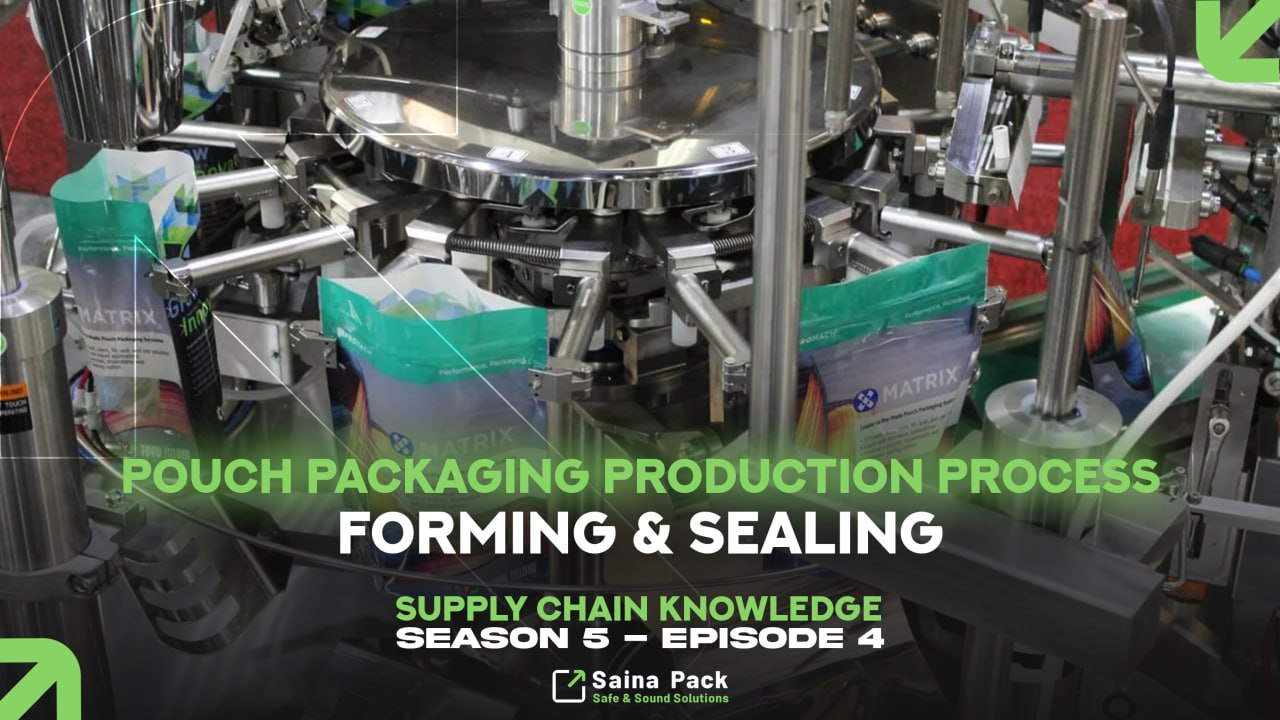
- Forming & Sealing
- Product Filling
- Final Sealing & Secondary Packaging
- Quality Control
In this article, we focus on raw material selection, as it defines the ultimate performance and protection of the product.
Film Selection by Product Type
Choosing the correct film structure depends on the type of product:
Liquids
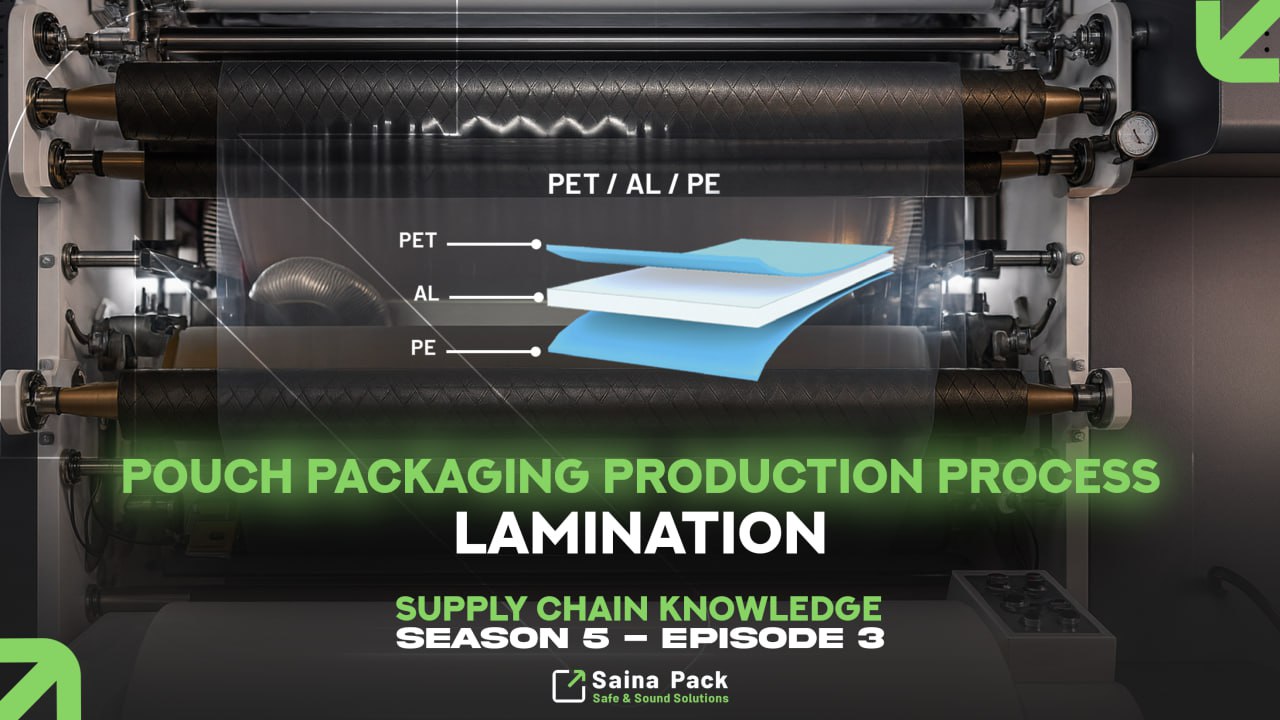
For liquid products, multi-layer films such as PET/NY/LLDPE or PET/AL/PE are typically used:
- PET: Mechanical strength
- Nylon/Aluminum: Gas and moisture barrier
- LLDPE: Excellent sealability
Viscous Products
Viscous products also require multi-layer films to ensure strength, barrier protection, and reliable sealing.
Dry Products / Powders
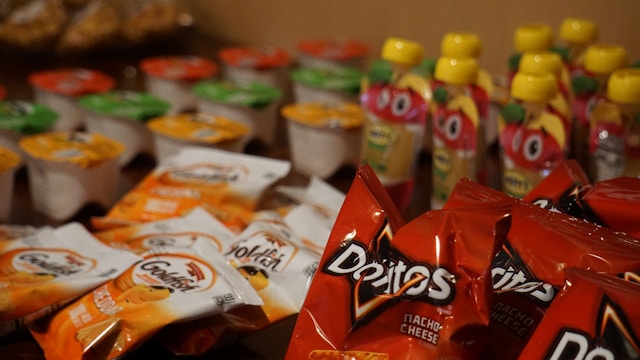
Simpler structures such as BOPP/CPP or PET/PE are ideal for dry foods, powders, or snacks:
- Strong moisture protection
- Reliable seal integrity
- Good printability
Sensitive Products
Highly sensitive products, such as coffee or pharmaceuticals, use PET/AL/PE laminates:
- Aluminum foil layer: Protects against light and oxygen
- Ensures extended shelf life
Material Supply Format
All films are supplied in roll form, typically ranging from 40 to 150 microns in thickness, and are ready for the next stages: printing, lamination, and pouch forming.
Conclusion
Selecting the right raw materials establishes a strong foundation for pouch packaging performance. Quality films and proper structures ensure product protection, durability, and brand integrity.