

Pouch Packaging Production Process: Lamination Stage
Introduction: The Role of Lamination in Flexible Packaging
After printing and design, the lamination stage is the backbone of flexible pouch production. This critical step involves bonding multiple films together to create multi-layer laminates that enhance durability, barrier protection, and product shelf life. Lamination ensures your product stays fresh, safe, and visually appealing throughout its journey from production to the consumer.
Production Steps Overview:
- Raw Material Selection
- Printing and Design
- Lamination 🔹 (Current Step)
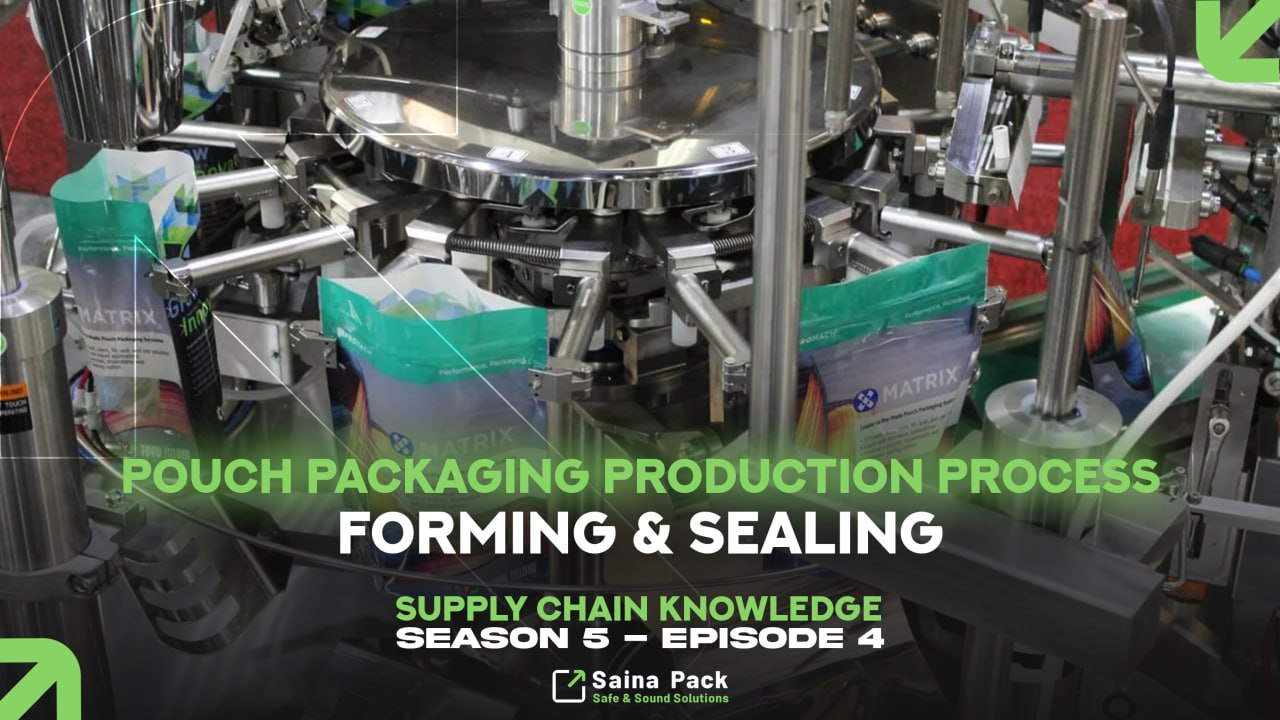
- Forming and Sealing
- Product Filling
- Final Sealing and Secondary Packaging
- Quality Control
Lamination Explained: Materials and Methods
Lamination is performed by bonding several films using solventless or solvent-based adhesives. The choice of laminate depends on:
- Product type
- Required barrier properties
- Desired shelf life
Common Lamination Types in Flexible Packaging:
- PET/PE – Ideal for general food products
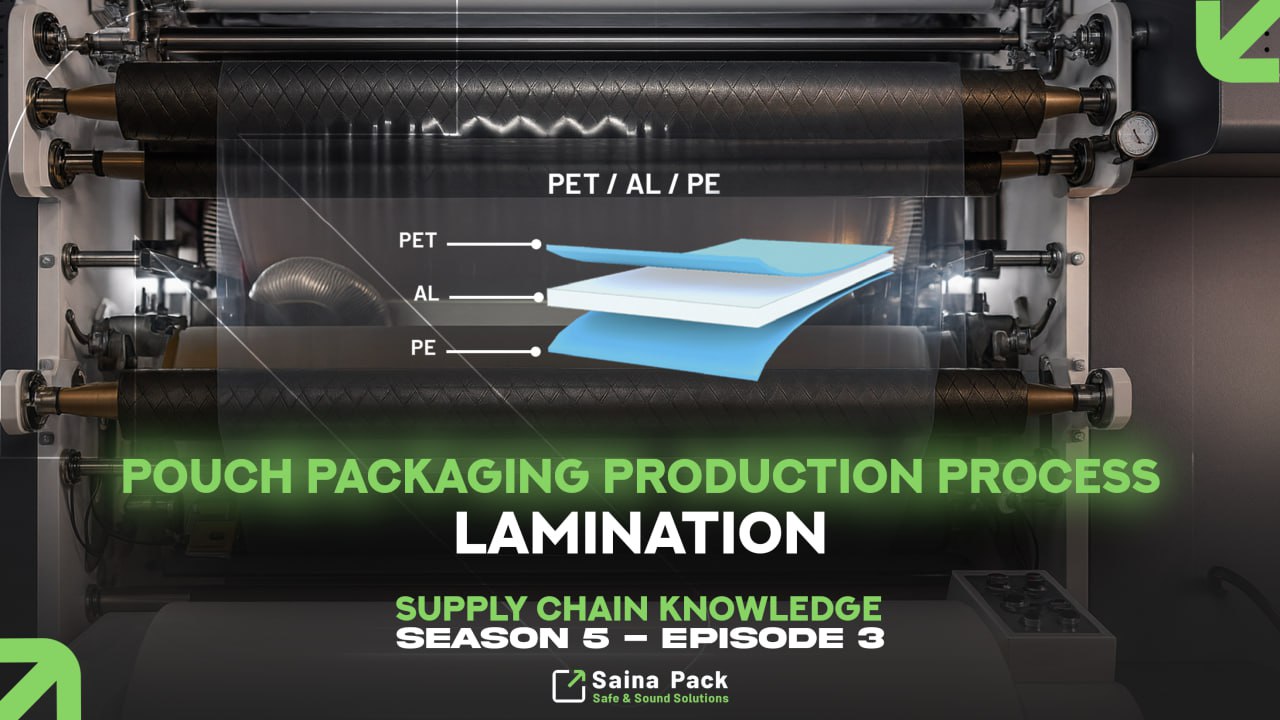
- PET/AL/PE – Provides excellent protection against light and oxygen for sensitive products
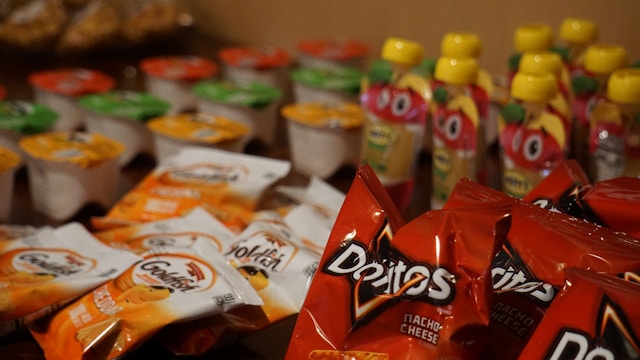
- BOPP/CPP – High gloss and stiffness, perfect for snacks and dry foods
(Images of each laminate type can be included here for visual clarity.)
Key Parameters of the Lamination Process
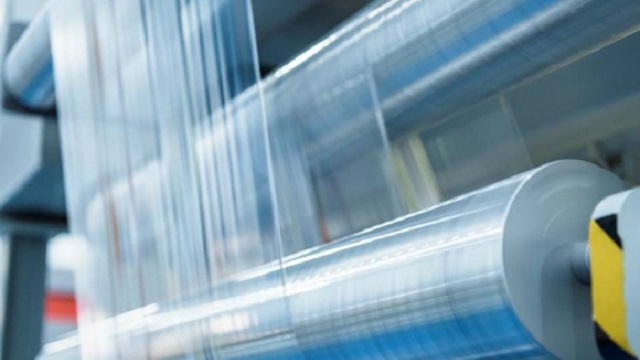
The lamination process uses duplex or triplex laminators, which bond multiple films in a single pass:
| Laminator Type | Layers per Pass | Production Notes |
| Duplex | 2 layers | Suitable for standard laminates, medium efficiency |
| Triplex | 3 layers | Handles multiple layers simultaneously, higher efficiency |
Process Highlights:
- Films are precisely aligned and tension-controlled to prevent wrinkles or misregistration.
- Laminated materials are then placed in a curing room at 40–50°C for 24–48 hours to ensure complete adhesive cross-linking, delivering maximum strength and durability.
Curing Parameters:
- Temperature: 40–50°C
- Time: 24–48 hours
- Outcome: Full adhesive bonding, superior laminate strength
Why Lamination Matters
- Enhances product protection against moisture, oxygen, and light
- Increases shelf life
- Improves mechanical strength for transport and handling
- Provides a professional, high-quality finish that appeals to consumers
Next Step: Forming and Sealing
Once lamination is complete, films are ready for the forming and sealing stage, where pouches are shaped and prepared for filling. This ensures a seamless transition from laminated material to ready-to-use packaging, maintaining product integrity throughout.